
Introduction
Choosing the right press brake is crucial for any manufacturing operation that works with sheet metal.
The quality, speed, and cost-effectiveness of your production depend on the machine’s precision and efficiency.
In this article, we’ll look at the two most popular types of machines — hydraulic and electric press brakes — to help you choose the one that best suits your needs.
What is the abkant press?
A press brake is a sheet metal bending machine that uses an upper tool (punch) and a lower tool (die) to shape the metal to the desired angle.
Depending on its technology, it can be either hydraulic or electric (servo-driven).
Hydraulic press brake – a classic solution for power and durability

Hydraulic press brakes are characterized by high pressing force and exceptional durability. They are suitable for thick sheets and large parts, where power is essential.
Advantages:
- High power and reliability under load.
- Suitable for intensive work and large production runs.
- More affordable price for higher tonnages.
- Easy maintenance and well-known technology.
Disadvantages:
- Slower than electric models.
- Higher consumption of energy and oil.
- Requires periodic maintenance.
Suitable for:
Companies with large-scale production that work with thick materials and prioritize power over speed.
Electric anvil press – the new generation in metal processing

Electric (or servo-driven) press brakes use electric motors instead of hydraulics. This makes them faster, more precise, and more energy-efficient.
Advantages:
- Exceptional bending speed and accuracy.
- Up to 50% lower energy consumption.
- Minimal maintenance and nearly silent operation.
- Suitable for automation and CNC control.
Disadvantages:
- Higher initial cost.
- Limited power when working with very thick sheets.
Suitable for:
Small and medium-sized companies seeking speed, efficiency, and low operating costs.
Comparison: Electric vs. Hydraulic anvil press
| Criterion | Electrical press brake | Hydraulic press brake |
|---|---|---|
| Type of production | Serial, precise | Heavy-duty, with thick sheets |
| Speed | Very high | Average |
| Energy efficiency | Excellent | Average |
| Maintenance | Minimal | More frequent |
| Initial price | Higher | More afordable |
| Precision | Very high | High |
| Noise levels | Low | Average |
How to make the right choice?
When choosing a press brake, consider the following factors:
- The thickness and type of material.
- Production volume and type of parts.
- Need for speed and automation.
- Budget and maintenance costs.
Tip: The best decision often comes after consulting a specialist who can make a realistic assessment of your production and recommend the optimal model.
Conclusion
- If you’re looking for power and reliability, choose a hydraulic press brake.
- If you’re looking for speed, precision, and efficiency, go for an electric press brake.
In any case, modern equipment is an investment that will help you achieve higher quality, lower costs, and a competitive advantage in the market.
Abkant press from „Carmet Bulgaria“ Ltd. – power, precision and choice according to your needs
Karmet Bulgaria Ltd. offers a wide range of hydraulic and electric (servo-driven) press brakes designed for high performance and reliability.
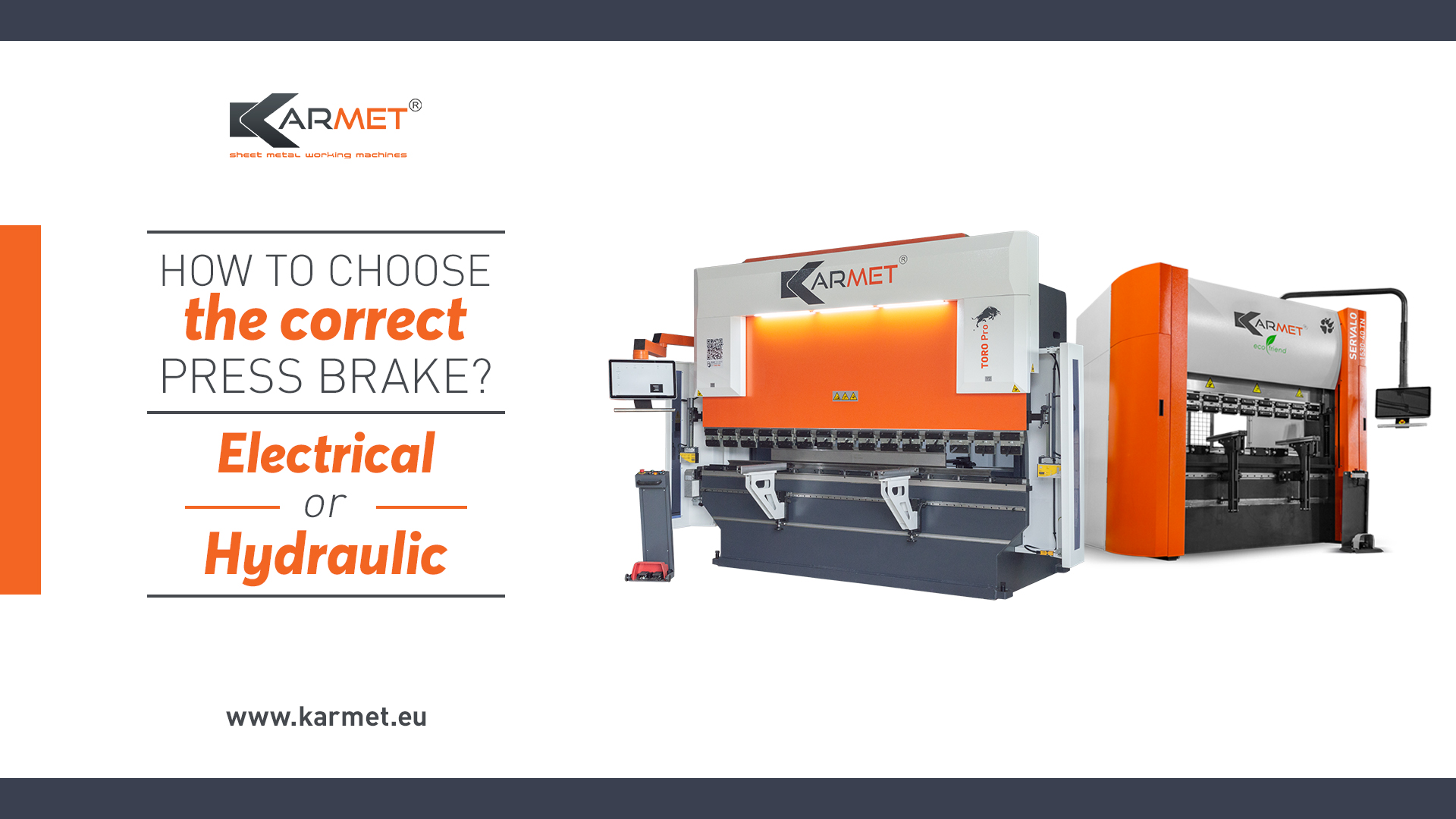
Our hydraulic TORO series provides power, stability, and durability when bending thick metal sheets. The electric SERVALO series offers high speed, energy efficiency, and precision for serial production.
Each series includes a variety of models that can be configured according to the client’s specific needs — from bending length and pressing force to control systems and additional equipment.
See them here:


Contact us
If you’re unsure which press brake is best for your business, our team can provide a free consultation and recommend the optimal solution based on your production needs.
Contact us:
Email: info@karmet.eu
Phone: +35932940969