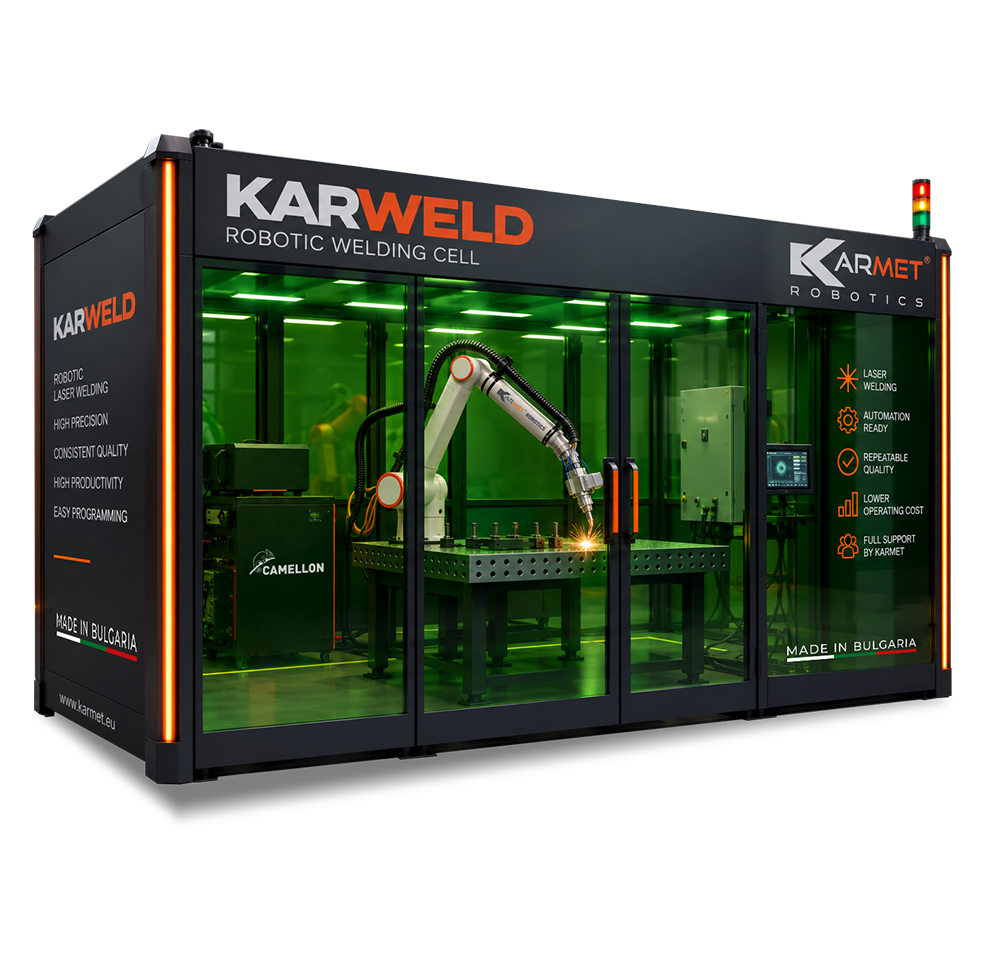
CAMELLON KARWELD
Fiber laser robotic welding cell

Fiber laser robotic welding cell

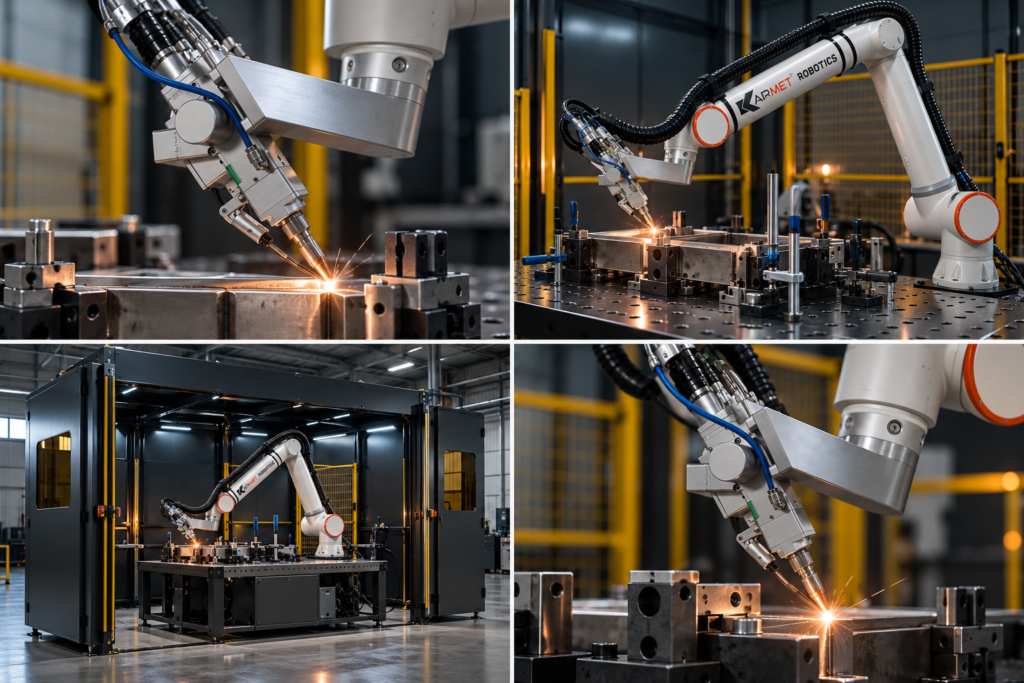
CAMELLON KARWELD is a robotic laser welding cell developed by KARMET to automate repetitive welding operations. The system combines a collaborative robot, fiber laser technology, robotic welding head, automatic wire feeder, professional welding table and protective enclosure in one integrated solution.
The robotic system helps achieve consistent weld quality and improved process repeatability. Thanks to intuitive teach-by-guiding operation, operators can set up new welding paths without advanced programming knowledge.
The robotic system helps achieve consistent weld quality and improved process repeatability. Thanks to intuitive teach-by-guiding operation, operators can set up new welding paths without advanced programming knowledge.
The robotic cell is designed, integrated and tested by KARMET in Bulgaria.
TEACH. WELD. REPEAT.
Manual guidance of the robot allows welding paths to be set quickly without advanced programming skills.
Precise, repeatable movements support consistent results and reduce variations typical of manual welding.
Automating repetitive operations can reduce processing time and increase production capacity.
New components and welding paths can be set up quickly as production requirements change.
The robot, laser source, welding head, wire feeder, table and protective enclosure operate as a single system.
CAMELLON KARWELD combines a collaborative robotic platform with intuitive teaching, fiber laser welding power from 1.5 to 6 kW, and automatic wire feeding. The system includes a protective enclosure, welding table and configuration options tailored to the specific application.
| MODEL | KARWELD 1500 | KARWELD 2000 | KARWELD 3000 | KARWELD 4000 | KARWELD 6000 |
|---|---|---|---|---|---|
| APPLICATION | Light precision applications |
Standard / Main model |
Higher Productivity |
Heavy-duty welding applications |
High power series |
| LASER TYPE | Fiber laser | ||||
| POWER | 1500 W | 2000 W | 3000 W | 4000 W | 6000 W |
| LASER SOURCE | Raycus | Raycus | Raycus | Raycus | Raycus |
| ROBOT MODEL | KR10 | KR10 | KR10 | KR10 | KR10 |
| WELDING HEAD | Wobble / Normal | ||||
| LASER WAVELENGTH | 1070 ±20 nm | 1070 ±20 nm | 1070 ±20 nm | 1070 ±20 nm | 1070 ±20 nm |
| MODULATION FREQUENCY | 1-20000 Hz | 1-20000 Hz | 1-20000 Hz | 1-20000 Hz | 1-20000 Hz |
| SPOT SIZE | 1.5/1.8/2.0 mm | 1.5/1.8/2.0 mm | 1.5/1.8/2.0 mm | 1.5/1.8/2.0 mm | 1.5/1.8/2.0 mm |
| COBOT PAYLOAD | 10-30 Kg | 10-30 Kg | 10-30 Kg | 10-30 Kg | 10-30 Kg |
| REACH | 1400-2500 mm | 1400-2500 mm | 1400-2500 mm | 1400-2500 mm | 1400-2500 mm |
| ROBOT WEIGHT | 40 Kg | 40 Kg | 40 Kg | 40 Kg | 40 Kg |
| ROBOT INPUT POWER | 42A max | 42A max | 42A max | 42A max | 42A max |
| IP CLASSIFICATION | IP54 | IP54 | IP54 | IP54 | IP54 |
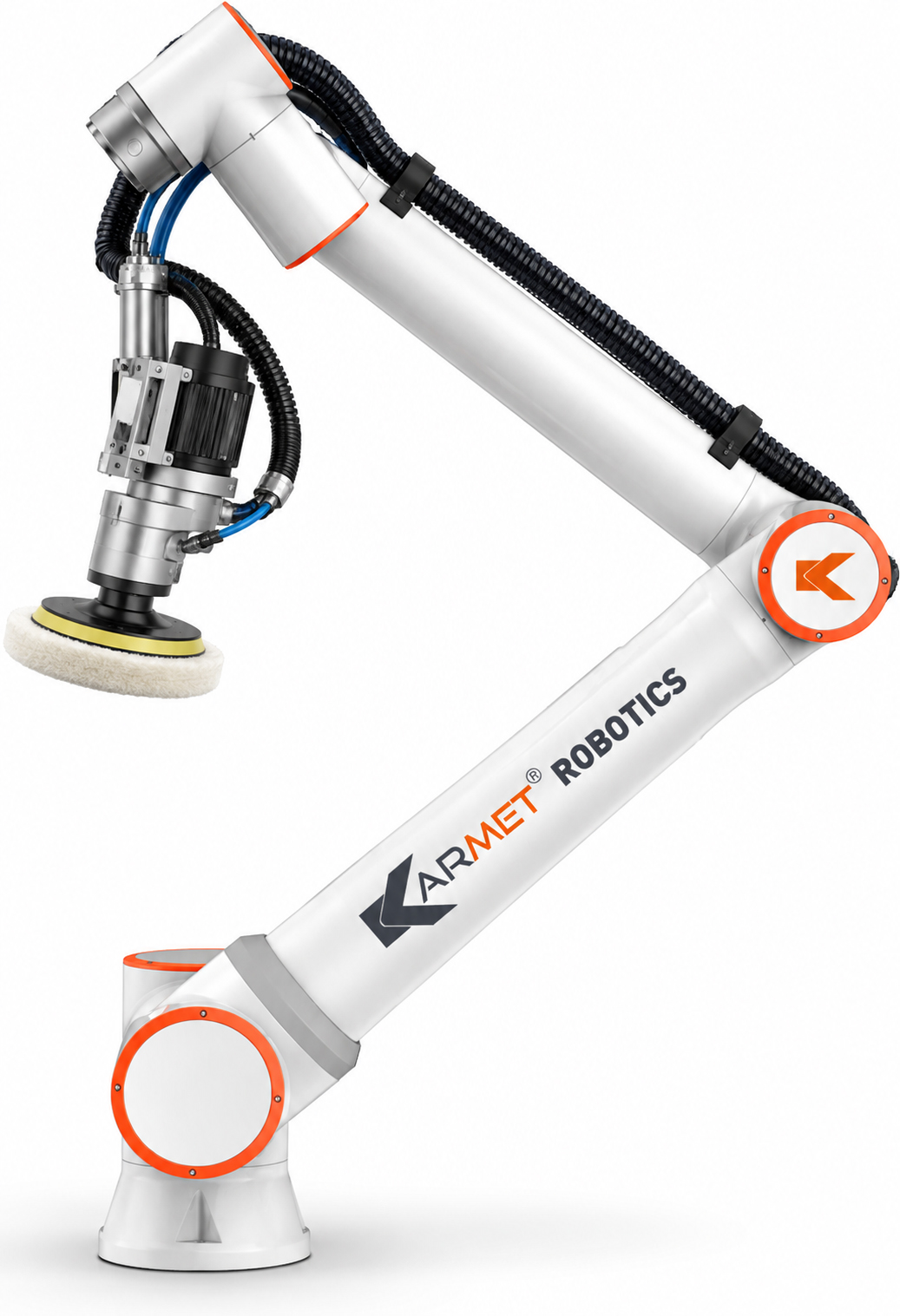
Polishing
Consistent Finish. Every Time. Robotic polishing combines controlled movement with application-specific tools to achieve consistent surface quality. The robot can follow complex geometries while maintaining repeatable motion across every production cycle.
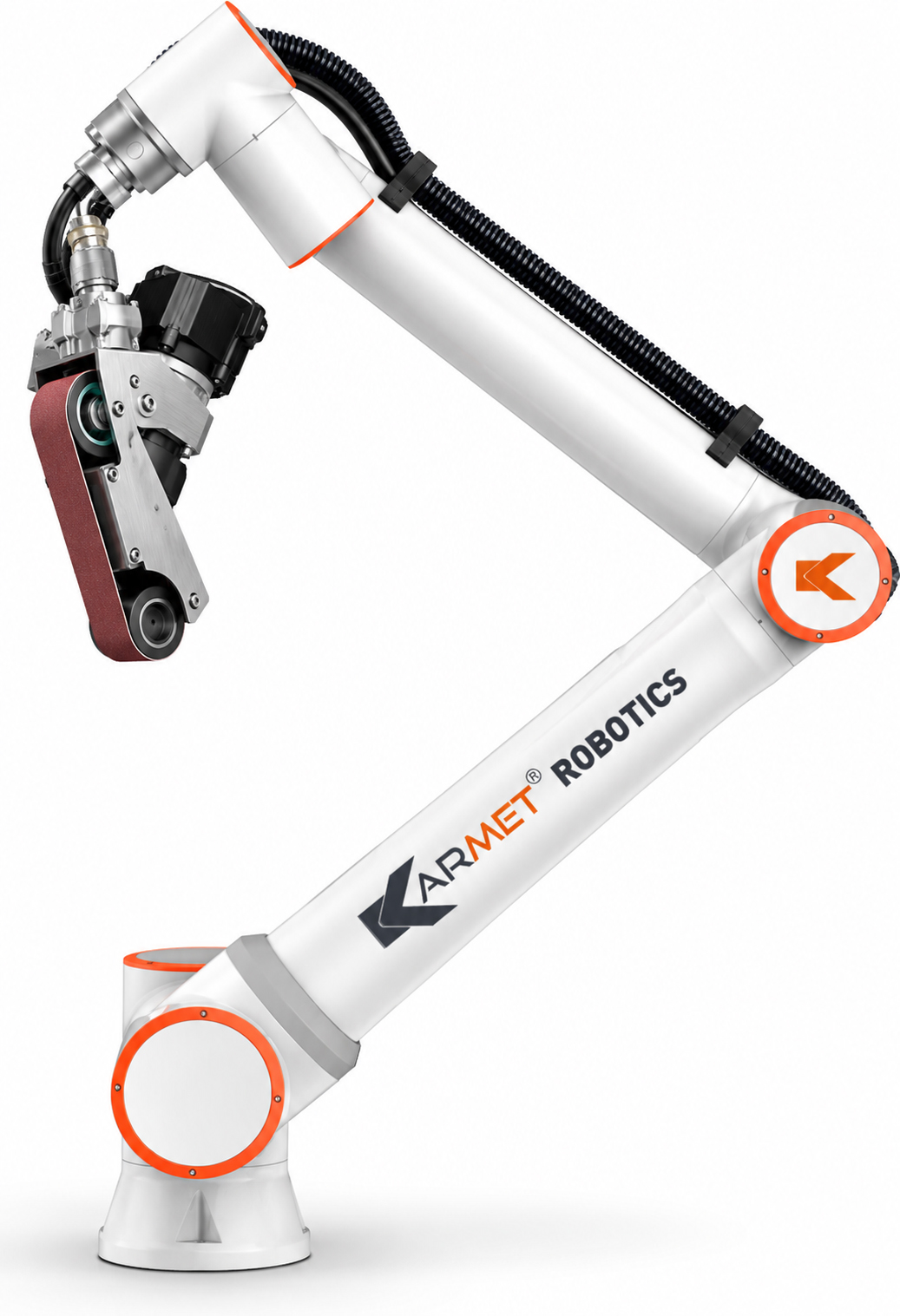
Grinding
Automate the Hard Work. Robotic grinding automates repetitive and physically demanding finishing operations. Different grinding tools can be integrated according to the part geometry, material and required surface result.
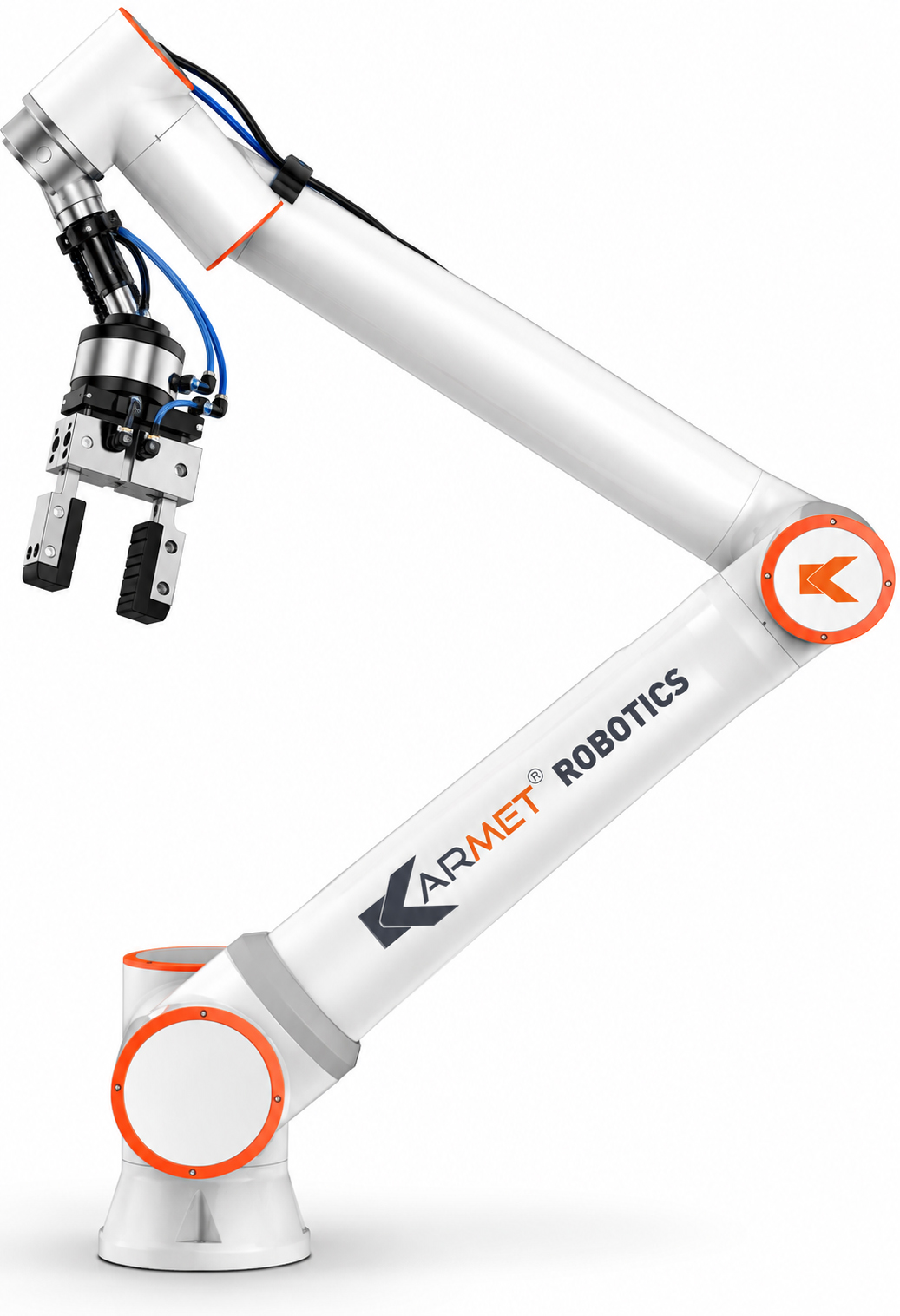
Handling
Move. Position. Repeat. Robotic handling provides a flexible solution for repetitive material movement, loading, unloading and positioning tasks. Different grippers can be integrated according to the workpiece and production process.
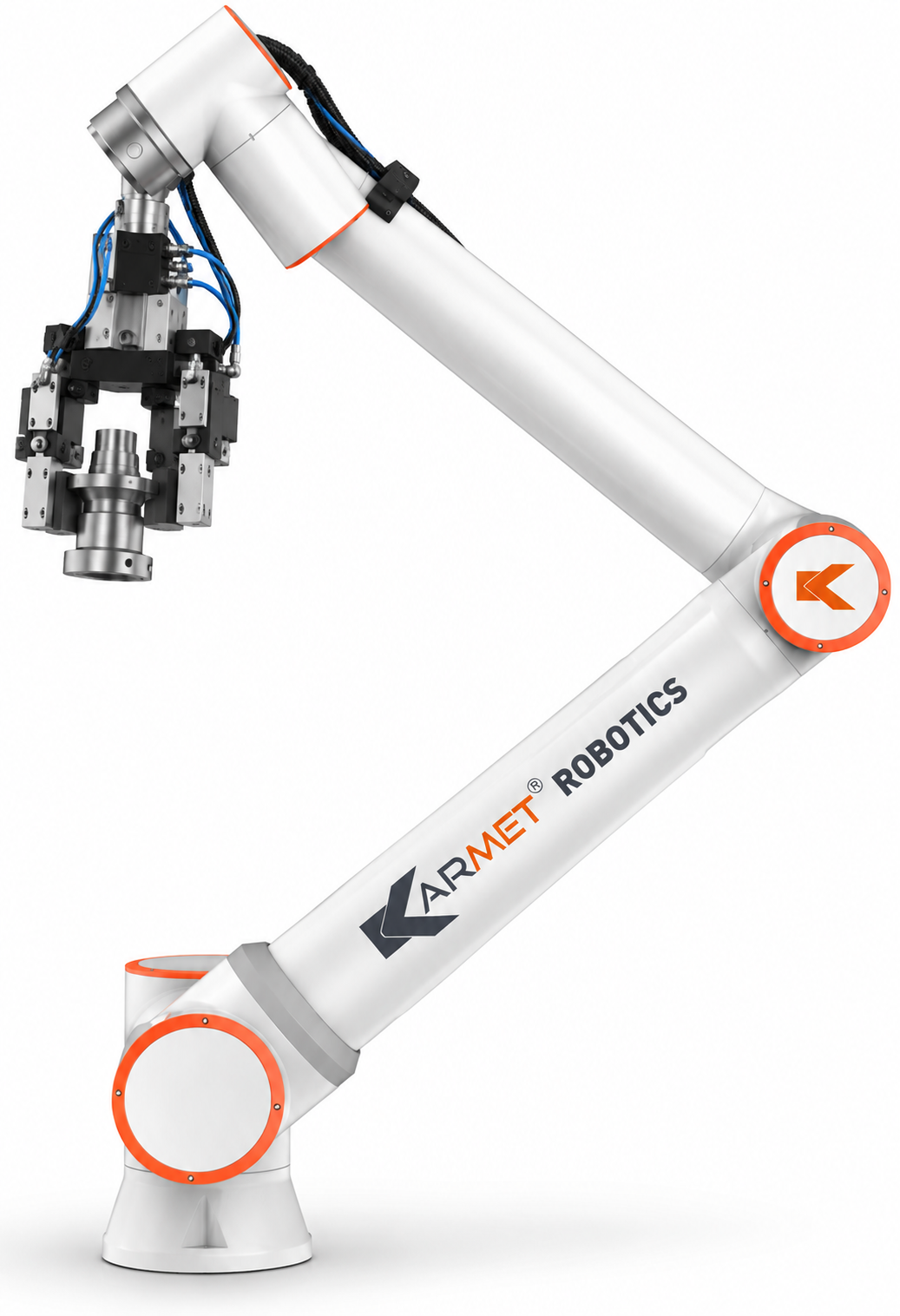
Machine tending
Keep Production Moving. Robotic machine tending automates repetitive loading and unloading operations, helping manufacturers increase machine utilization and reduce operator dependency.